What I Learned Growing Up Between Cuba, Russia, and the Real World
By Igor Iturriaga
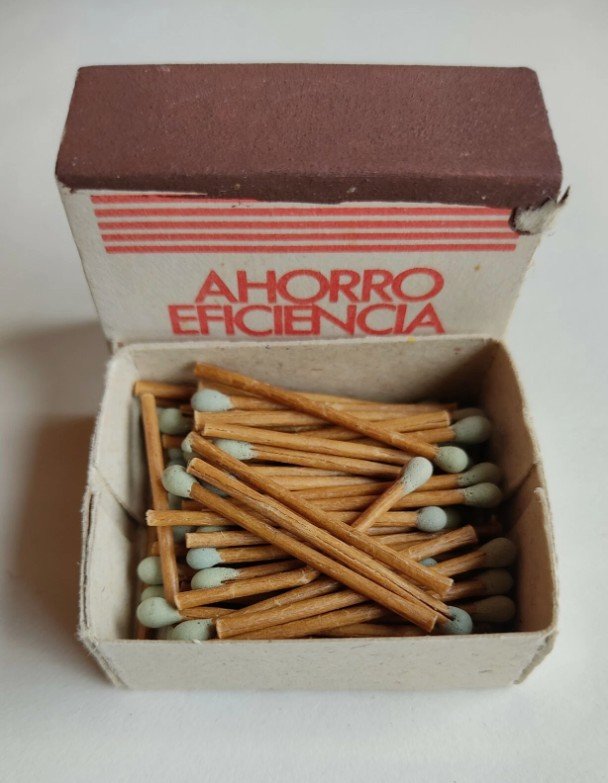
I remember holding a matchbox in Cuba.
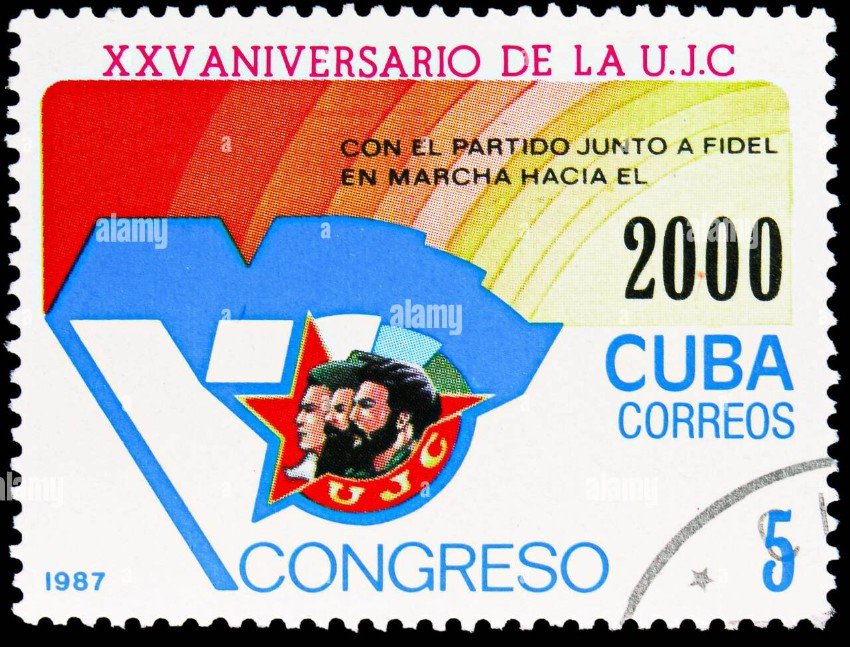
It wasn’t just any matchbox—it was the only one. The same design, the same message, everywhere on the island. Printed on it was a slogan: “Con el partido junto a Fidel, en marcha hacia el 2000.” With the party alongside Fidel, marching toward the year 2000.
It was everywhere.
And that was the problem.
I didn’t know it at the time, but that small matchbox captured everything that felt wrong. The world outside was changing, evolving, moving forward. But in Cuba, everything felt frozen, repeating the same message, the same ideas, the same reality.
That moment stayed with me.
The First Time I Questioned the System
I was young—around 1988 or 1989—but I was already thinking on my own.
I remember sitting at my uncle’s dinner table in Havana. He was a high-ranking police officer, deeply loyal to the system. In the middle of dinner, out of nowhere, he started praising the Revolution and Fidel Castro.
It felt completely out of place.
Who talks about politics like that at a family dinner?
He gave his opinion. I gave mine.
He didn’t like it.
Things escalated quickly. He got aggressive. My cousin and my aunt had to step in before it turned physical.
But I remember exactly what I said.
I told him I didn’t want to follow a man who had already been proven wrong in so many things. I told him I didn’t want that man leading me into the new millennium.
That moment changed something in me.
That was when I understood:
I was not going to accept reality just because it was handed to me.
Cuba: Where Survival Teaches You to Be Ruthless
I lived in Cuba until I was ten, then left and came back when I was 18-19 and those years shaped me in ways most people don’t understand.
By the time I was in fourth grade, I had already attended six different schools. I moved constantly, often living in rough neighborhoods in Havana.
I stood out.
I was a white kid in environments where that mattered.
I remember my first day at one school. A kid started making fun of me. I didn’t argue. I didn’t wait.
I smashed my briefcase over his head. There was a glass bottle inside—it broke.
He never bothered me again.
That was Cuba.
You didn’t schedule conflict. You didn’t negotiate it. You solved it immediately.
But the real lesson wasn’t violence.
It was scarcity.
When I left and came back, nothing had changed, just my view.
I saw lines for food. Lines for basic goods. People waiting hours for whatever happened to be available that day.
Cuba was a paradise—not for consumers, but for sellers.
Everyone needed something.
And that’s where I learned my first real lesson about money.
Russia: Where Discipline Becomes Non-Negotiable
When I moved to Moscow, everything changed.
The first thing that hit me wasn’t just the cold—it was the expectations.
In Cuba, survival teaches you to adapt.
In Russia, the system demands that you perform.
My First Business: Bottles, Cameras, and Independence
I started collecting glass bottles and jars.
It wasn’t glamorous, but it worked.
After a couple of months, I made about $300. In 1982-1983, that was a lot of money for the time.
That money changed everything.
I bought a professional camera, flash, and photography equipment. For the first time in my life, I had something that was mine—something I didn’t need permission to use.
Money meant freedom.
I remember showing my equipment to a friend of my mom’s. She saw what I had and asked how I got it.
When I told her, she smiled.
“If you’re a businessman,” she said, “I have something for you.”
She gave me old vinyl records—Michael Jackson, Lionel Richie. I sold them for a profit—about 10 rubles each—and kept the original photography inserts that came with them.
That’s when I understood something fundamental:
If you can buy low and sell high, you can create your own reality.
Education was on another level.
You saw people reading everywhere—on buses, in parks, at bus stops. Literature, science, art. It wasn’t optional. It was part of the culture.
I even attended drawing school after classes—learning sculpture, painting, working with clay, charcoal, oils.
Russia didn’t just educate you.
It forced you to rise to its level.
But there was another difference.
Conflict.
In Cuba, if you had a problem, you solved it immediately.
In Russia, it was more structured.
It had a preset set of rules to be followed.
Same outcome. Different process.
A Different World Inside Moscow
I lived in a diplomatic building.
Everyone there had a diplomatic passport.
My friends weren’t just Russian—they were from Algeria, Spain, India, Bulgaria, Hungary, Poland, Germany, Czechoslovakia, Egypt, Yemen, Senegal, Japan, USA, Yugoslavia…
If I forgot to mention a nationality, I welcome you to write to me and remind me of a story we share, I know there would be many.
I was exposed to multiple cultures at once, long before I understood how rare that was.
I even had a crush on a French girl, Caroline.
She invited me to her birthday party.
Then she moved the party to the American embassy—where they had a nightclub.
I ran home to grab my passport.
I didn’t ask permission.
I was chasing something else.
But when my mother found out where I was going, she stopped it immediately.
That was the end of Caroline.
Back to Cuba: The Hustle Becomes Real
When I returned to Cuba, I wasn’t the same.
I had seen another system.
I had experienced discipline, structure, and opportunity.
And now I saw Cuba differently.
I didn’t belong anymore.
So I did what made sense.
I started making money.
With my Soviet passport, I could legally carry foreign currency—something most Cubans couldn’t do.
That created an opportunity.
And I exploited it.
How I Made $100–$150 USD a Day in Cuba
My day looked like this:
- I charged people 10% to use my access to foreign currency and stores.
- Minimum transaction: $20.
- If they needed transportation, I charged another $10.
- I worked with a friend who was a taxi dispatcher and got runs under the table—another $20.
- At night, I went to tourist nightclubs.
That’s where it got interesting.
Waiters and waitresses had to surrender their tips to the government.
So they gave them to me first.
I bought their tips at a discount, made $20–$40, and then drove them home for another $10–$15 each.
By the end of the day, I was making $100–$150.
In Cuba, that was a fortune.
Everything I was doing was illegal.
But it was also necessary.
The black market wasn’t an exception.
It was the system correcting itself.
When the System Takes Credit for Your Work
At university in Cuba, I worked on a project with a computer science professor.
We built a database system to optimize classified ads—specifically for the real estate exchanges, which were extremely complex due to government restrictions, you could not sell real estate, you could only “exchange”.
Using a laptop my father had gotten from work, I created a system where you could input parameters and instantly find matches for your real estate inquiries.
It worked.
But when I returned from vacation, the project had been implemented—if someone took credit, I don’t know.
All I know is that i got No recognition.
No compensation.
It was as if I had never existed.
That was another lesson.
Canada and the United States: The Real World
When I moved to Canada, everything changed again.
For the first time, I saw what I now call “the real world.”
The same things I was doing in Cuba—buying, selling, hustling—were possible here.
But there was a difference.
You had to be compliant.
- Register a business
- Get a tax ID
- Open a business bank account
- Report taxes
This wasn’t survival anymore.
This was structure.
And if you understood the rules, you could scale.
What Growing Up in Multiple Systems Taught Me
I lived in Cuba.
I lived in Russia.
I lived in Canada.
I lived in the United States.
I didn’t just visit these places.
I lived in them long enough to understand how people feel and think.
And what I learned is simple:
At the core, we are all the same.
Different cultures. Different systems. Different rules.
But the same fears.
The same ambitions.
The same need to protect what matters.
The Lessons That Stayed With Me
- In Cuba, survival teaches you to be ruthless.
- Russia forces you to be strong.
- Canada and America, teaches you to follow the rules.
Money, to me, became freedom.
And most people don’t understand that the system you grow up in shapes how you think—but it doesn’t have to define how you act.
Final Thought
My name is Igor Iturriaga.
Growing up between Cuba, Russia, and the real world taught me that the world is small—but the way you see it determines everything.
You can accept what you’re given.
Or you can question it, challenge it, and build something of your own.
I chose the second.
Hi, this is a comment.
To get started with moderating, editing, and deleting comments, please visit the Comments screen in the dashboard.
Commenter avatars come from Gravatar.